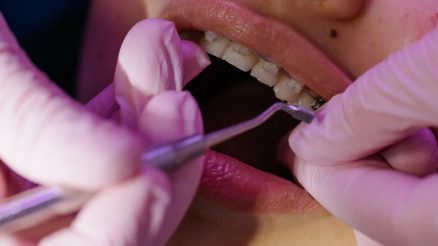
If you have noticed a slight overlap between your front teeth that was not there a decade ago, or a retainer that no longer slides in without pressure, you are not imagining things. Teeth move throughout life, not just during childhood or the years you wore braces. It happens gradually, often so slowly that people only notice once a gap has opened, a tooth has rotated, or a bite feels different when chewing. Understanding why this happens can make the change feel a lot less alarming, and it can help you decide when it is worth having a professional take a look.
Your Bite Is Not a Fixed Structure
It is easy to think of teeth as permanently set in the jaw once they finish growing in, similar to how a fence post is set in concrete. In reality, each tooth sits in a socket lined with a periodontal ligament, a network of fibers that allows for tiny amounts of movement. This is actually necessary. Without some flexibility, chewing forces would be far more damaging to the jawbone and to the teeth themselves.
That built-in flexibility is exactly what makes orthodontic treatment possible in the first place, and it is also what allows teeth to drift out of position over the years in response to everyday forces like chewing, clenching, and even the resting position of the tongue and lips.
The Forward Drift Nobody Notices Until It’s Visible
Dentists sometimes refer to a pattern called mesial drift, where teeth gradually migrate forward and inward over time. This is thought to be related to the natural angle of forces from chewing and from neighboring teeth pushing against each other in a chain reaction. Over enough years, this forward pressure can cause the lower front teeth in particular to crowd and overlap, even in people who had straight teeth as young adults.
This is one of the most common reasons someone who never needed braces as a teenager suddenly finds their bottom teeth crowding together in their 40s or 50s. The change is rarely dramatic in any single year, which is part of why it catches people off guard when they finally notice it in the mirror or in old photos.
What Happens to Your Jawbone as You Age
The jawbone itself is living tissue, and like the rest of the skeleton, it changes shape and density over a lifetime. Bone remodels constantly, with old bone being broken down and new bone being built in its place. As people age, this remodeling process can slow down and become less balanced, and the jaw can lose some width and height, particularly along the front where the lower teeth sit.
A narrower dental arch has less room for the same number of teeth, which naturally pushes them closer together. This is a slow structural change rather than something caused by a single habit, and it is one reason shifting can happen even in people with excellent oral hygiene and no history of gum disease.
Gum Health and Its Role in Tooth Movement
Healthy gum tissue and the bone beneath it act like a stable foundation holding each tooth firmly in place. When gum disease is present, that foundation weakens. Bacteria below the gumline can break down the connective tissue and bone that support the teeth, and once that support diminishes, teeth become more prone to drifting, tilting, or even loosening.
This is one of the more preventable causes of tooth movement, since it is tied directly to plaque buildup and inflammation rather than an unavoidable aging process. Regular cleanings and consistent home care go a long way toward keeping this particular cause off the list of things working against your smile.
Grinding, Clenching, and Nighttime Pressure
Many people clench or grind their teeth at night without ever realizing it, often finding out only when a dentist points out worn edges or flattened chewing surfaces. This repeated pressure does not just wear down enamel. Over months and years, it can also nudge teeth out of alignment, particularly in people whose bite forces are already uneven.
Stress is frequently a contributing factor, and so is sleep quality, since a lot of grinding happens during lighter stages of sleep. Anyone who wakes up with a sore jaw, tension headaches, or sensitivity that seems to come and go might be dealing with this without ever having connected the dots to their shifting teeth.
Wisdom Teeth: The Late Arrivals That Push Back
Wisdom teeth typically arrive in the late teens or early twenties, well after the rest of the permanent teeth have settled into position. When there is not enough room for them, they can push against the neighboring molars as they try to erupt, sending a wave of pressure forward through the entire arch.
Even wisdom teeth that never fully break through the gum line, known as impacted teeth, can exert this kind of pressure. This is one reason some people notice new crowding in their twenties specifically, even though their teeth looked perfectly aligned throughout their teenage years.
Tongue Posture and Muscle Balance
The position of the tongue at rest and the strength of the muscles around the mouth play a bigger role in tooth position than most people assume. Teeth sit in a kind of balance zone between the outward pressure of the tongue and the inward pressure of the cheeks and lips. When that balance shifts, whether from a tongue-thrust habit, mouth breathing, or changes in muscle tone, teeth can respond by moving in the direction of least resistance.
This is a subtler cause than something like grinding or gum disease, but it explains why two people with similar oral hygiene and similar bite patterns can experience very different amounts of shifting over the same number of years.
Old Orthodontic Work Doesn’t Always Hold
Braces and clear aligners are remarkably good at moving teeth into a new position, but the periodontal ligaments and surrounding bone need time to fully adapt and stabilize around that new alignment. This is why retainers are prescribed after treatment finishes, and it is also why teeth can begin drifting back toward their original position if retainer wear tapers off.
For adults who had orthodontic treatment as teenagers and stopped wearing a retainer years ago, some relapse is common and often the exact explanation for shifting that otherwise seems to come out of nowhere. The good news is that adult orthodontic options have expanded considerably, and treatments like Invisalign for adults in Tewksbury make it possible to correct this kind of relapse discreetly, without the look of traditional metal brackets.
When Missing Teeth Speed Up the Shift
Every tooth in the mouth helps hold its neighbors in place, and losing even one tooth removes that support. Without a replacement, neighboring teeth can begin tilting into the empty space, and the opposing tooth in the other arch can start to shift as well, since it no longer has anything to bite against. This process, sometimes called drifting or supra-eruption, tends to accelerate the longer the gap goes unaddressed.
This is part of why dentists generally recommend replacing a missing tooth sooner rather than later. Practices offering custom dental implant solutions in Tewksbury point out that implants are designed to restore both the chewing function and the structural support a natural tooth root once provided, which helps prevent the surrounding teeth from drifting into the space over time.
Retainers: The Maintenance Step Most People Skip
A retainer is one of the simplest tools available for managing shifting teeth, yet it is also one of the most commonly abandoned parts of dental care. Many people wear a retainer faithfully for the first year after orthodontic treatment and then gradually stop, assuming the results are permanent.
In truth, some retention is typically needed indefinitely, even if that means wearing a retainer only a few nights a week later in life. For people who have lost or broken an old retainer, getting a replacement made is usually straightforward and far less involved than starting orthodontic treatment over again from scratch.
What You Can Actually Do About It
Not every cause of tooth shifting is preventable, but several of them respond well to fairly simple habits. Wearing a nightguard if grinding is suspected, keeping up with regular cleanings to protect gum health, replacing missing teeth promptly, and wearing a retainer consistently can all meaningfully slow the process down.
It also helps to pay attention to patterns rather than single snapshots. A photo comparison every year or two, or simply checking whether a retainer still fits the way it used to, can catch shifting early, while options for addressing it are still simple and conservative.
When to See a Dentist About Shifting Teeth
Some amount of movement over the decades is normal and not something to panic about. That said, sudden shifting, new gaps, a tooth that feels loose, or a bite that suddenly feels uneven when chewing are all worth having examined, since they can sometimes point to gum disease, bone loss, or a bite problem that is easier to manage the earlier it is caught.
A dental team can take a look at the whole picture, including bone levels, gum health, and bite alignment, rather than just the tooth that happens to be bothering you. Offices such as MGS Dental’s Tewksbury office are set up to evaluate shifting teeth in the context of overall oral health, which makes it easier to figure out whether the cause is something structural, something habitual, or simply the natural result of years of everyday wear.
Teeth moving with age is one of those quiet realities of dental health that rarely gets discussed until someone notices it firsthand. The causes range from bone remodeling and gum health to grinding, missing teeth, and old orthodontic relapse, and most of them are manageable once identified. A little awareness now, paired with the right dental support when something changes, keeps a shifting smile from turning into a bigger problem down the road.